Book Review: How To Win Friends And Influence People
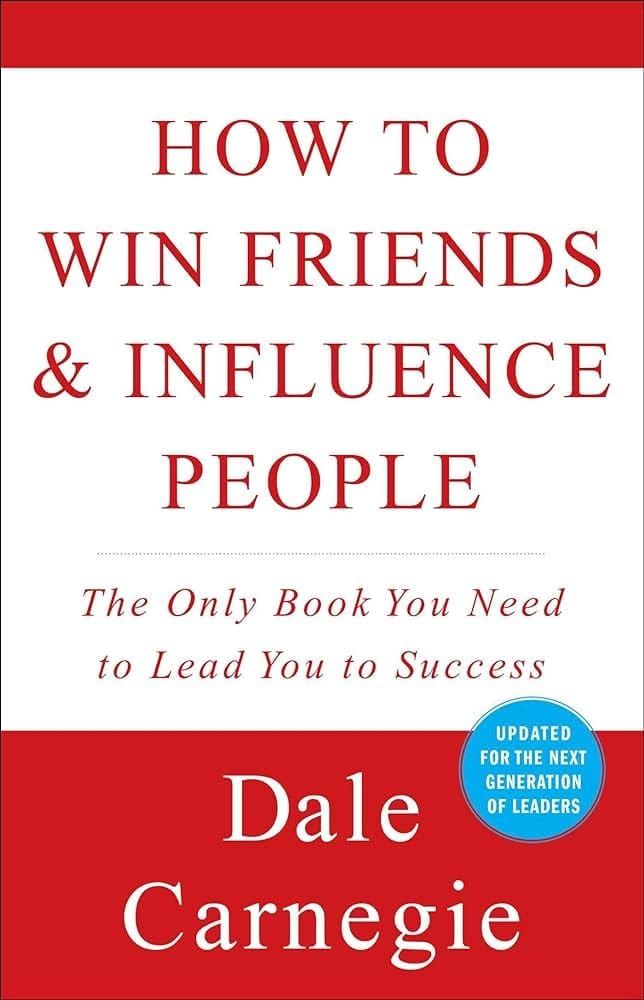
Book Information
Title: How to Win Friends & Influence People
Author(s): Dale Carnegie
Genre(s): Nonfiction, Psychology, Personal Development, Leadership
Published On: January 1, 1998
Publisher: Gallery Books
Pages: 288
"You can go after the job you want...and get it! You can take the job you have...and improve it! You can take any situation you're in...and make it work for you!
Since its release in 1936, How to Win Friends and Influence People has sold more than 30 million copies. Dale Carnegie's first book is a timeless bestseller, packed with rock-solid advice that has carried thousands of now famous people up the ladder of success in their business and personal lives.
As relevant as ever before, Dale Carnegie's principles endure, and will help you achieve your maximum potential in the complex and competitive modern age.
Learn the six ways to make people like you, the twelve ways to win people to your way of thinking, and the nine ways to change people without arousing resentment."
This is not a sponsored post, all opinions are my own!
The Book In 3 Sentences
- Human connection is a skill that can be learned, practiced, and mastered.
- Influence isn’t about manipulation—it’s about genuine curiosity, empathy, and making others feel valued.
- Small shifts in how you communicate can dramatically improve your relationships, opportunities, and overall quality of life.
How The Book Changed Me
Dale Carnegie’s timeless principles reshaped the way I approach conversations. Instead of focusing on what I wanted to say, I began paying attention to what others needed to feel heard. I noticed how simple gestures—remembering someone’s name, listening without interrupting, offering sincere appreciation—could transform interactions that once felt transactional into meaningful connections.
This book made me rethink the idea of “charisma.” It’s not something you’re born with; it’s something you build through intentional habits. I became more aware of how often people just want acknowledgment, not advice. The more I applied Carnegie’s ideas, the more natural it felt to lead with empathy rather than ego. It’s surprising how far kindness and curiosity can take you.
How I Came Across The Book/Who Should Read It
I discovered this book during a period when I was trying to improve my communication skills—both personally and professionally. I kept hearing entrepreneurs, leaders, and creators reference it as a foundational text, so I finally picked it up. It didn’t take long to understand why it’s still relevant nearly a century after publication.
This book is for anyone who wants to become better at dealing with people—whether you’re building a business, navigating corporate life, strengthening friendships, or simply trying to be a more thoughtful communicator. If you’ve ever felt misunderstood, overlooked, or unsure how to connect with others, Carnegie’s principles offer a practical roadmap.
My 3 Favorite Quotes
“Remember that a person’s name is to that person the sweetest and most important sound in any language.”
“You can make more friends in two months by becoming interested in other people than in two years by trying to get other people interested in you.”
“The only way to get the best of an argument is to avoid it.”
Summary/Thoughts
How to Win Friends and Influence People is a masterclass in human behavior. Carnegie breaks down the psychology behind why people respond positively to certain behaviors—genuine appreciation, active listening, humility—and negatively to criticism, arguments, and ego-driven communication. His examples, though dated in setting, remain incredibly relevant because human nature hasn’t changed.
The book emphasizes that influence isn’t about being the loudest voice in the room; it’s about making others feel important. Carnegie shows how leaders, negotiators, and everyday people can create better outcomes simply by shifting their mindset from “How do I win?” to “How do we both win?”
Some principles may feel obvious, but that’s the point—most people don’t practice them consistently. The magic is in the application. When you start using these ideas intentionally, you’ll notice people respond differently. Conversations become smoother. Conflicts become easier to navigate. Opportunities appear where they didn’t exist before.
This book won’t turn you into a master communicator overnight, but it will give you the tools to start becoming one. If you’re willing to practice, reflect, and adjust, Carnegie’s principles can genuinely elevate your personal and professional relationships.